
Challenge
W Trek in Torres del Paine
Torres del Paine, Magellan and the Chilean Antarctic, Chile
About this challenge
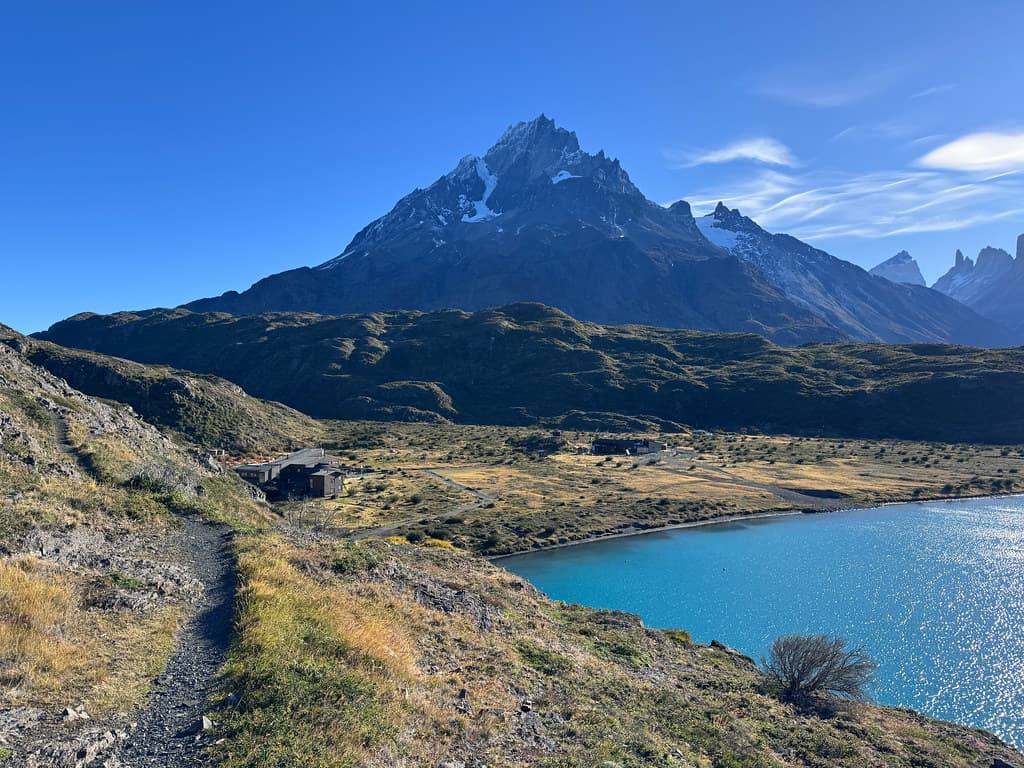
The W Trek in Torres del Paine stands as South America's most spectacular and accessible multi-day hiking adventure, traversing 70-80 kilometers through three dramatic valleys beneath towering granite spires in Chilean Patagonia. This iconic 4-5 day trek follows a distinctive "W" shape across Grey, French, and Ascencio valleys, showcasing pristine glacial lakes, ancient granite towers, and the advancing Grey Glacier. The trail attracts thousands of international hikers annually seeking to experience the legendary granite towers of Las Torres, hanging glaciers of French Valley, and calving icebergs of Lago Grey. Well-developed refugio and camping infrastructure makes this moderate-to-challenging trek accessible to hikers with solid fitness levels, while Patagonia's notorious weather conditions demand proper preparation and flexible planning.
Quick facts
- Checkpoints
- 5
- Distance
- 75 km
- Avg Completion
- 4-5 days
- Best Season
- Spring, Fall, Winter
Overview
The W Trek in Torres del Paine National Park stands as one of South America's most spectacular hiking adventures, attracting thousands of outdoor enthusiasts annually to Chilean Patagonia. This iconic 70-80 kilometer trek takes you through three dramatic valleys beneath towering granite spires, offering an unforgettable journey through pristine wilderness. The trail spans 4-5 days with approximately 2,730 meters of total elevation gain, reaching its highest point at 850 meters above sea level. You'll traverse the distinctive W-shaped route across Grey, French, and Ascencio valleys, each presenting unique landscapes from glacial lakes to hanging glaciers. Daily distances range from 12-24 kilometers, making it accessible to hikers with moderate experience while still challenging seasoned adventurers.
History and Geology
Culturally significant to the indigenous Tehuelche people who called the towers "Towers of Blue Sky," the park was established in 1959 and became a UNESCO Biosphere Reserve in 1978. The modern refugio system developed in the 1970s now supports sustainable tourism while protecting fragile ecosystems, demonstrating how world-class outdoor recreation can coexist with environmental conservation. The W Trek traverses one of Earth's most geologically fascinating regions, showcasing dramatic results of ancient tectonic activity and glacial sculpting. The iconic granite towers formed approximately 12 million years ago when massive magma intrusions cooled deep underground, later exposed through millions of years of erosion. These granite spires rise vertically over 1,000 meters from their bases, creating some of the most dramatic relief on Earth. The distinctive black sedimentary caps on peaks like Cuernos del Paine represent ancient seafloor deposits that once covered the granite, now remaining only on the highest peaks. Glacial activity carved the deep valleys hikers traverse today, with retreating ice leaving behind spectacular lakes, moraines, and U-shaped valleys that characterize the W Trek landscape. Trail development began in the 1970s with the establishment of the refugio system, creating sustainable tourism infrastructure that supports local communities while protecting ecosystems. Local estancias and gaucho culture add authentic Patagonian character to the trekking experience, connecting modern hikers with the region's rich pastoral heritage.
Safety
Weather protection requires comprehensive layering systems capable of handling Patagonia's notorious wind conditions, which can exceed 100 km/h even during summer months. Essential gear includes wind-resistant outer layers, waterproof jackets and pants, insulating layers, and four-season expedition tents for campers. Technical equipment should include sturdy hiking boots with ankle support, trekking poles for steep sections, and quality backpacks suitable for multi-day treks. Navigation benefits from excellent waymarking with wooden posts and painted markers throughout the route. The trail follows well-established paths with clear signage at major junctions, though weather conditions can reduce visibility during storms. GPS devices, detailed park maps, and offline mapping capabilities ensure reliable navigation in areas without cellular coverage. W Trek hiking presents significant challenges with unpredictable weather combining extreme winds and potential hypothermia risks. Weather can change rapidly, with temperatures dropping 20°C within hours. River crossings present seasonal challenges during spring snowmelt, while suspension bridges may close during extreme wind conditions. Emergency evacuation from remote locations can be extremely difficult and expensive, making comprehensive travel insurance essential for international visitors.
Nutrition and Other
The W Trek offers accommodation through well-developed refugios and designated campsites positioned strategically along the trail. Refugios provide dormitory accommodation, meals, and basic supplies, eliminating the need for heavy camping equipment. These facilities must be booked well in advance, especially during peak season from December to March, through the park's official booking system. Food planning varies depending on accommodation strategy. Refugios provide meal service, allowing hikers to minimize pack weight while ensuring adequate nutrition. Self-catering requires carrying 4-5 days of lightweight, high-energy foods including energy bars, nuts, dried fruits, and freeze-dried meals suitable for camp stove preparation. Water management benefits from abundant clean water sources throughout the park, with streams, lakes, and refugio facilities providing reliable access to potable water. Natural sources typically require purification tablets or filters for safe consumption. The W Trek requires advance booking through the park's official reservation system. Park entrance fees are approximately $35 USD during peak season and $21 USD during shoulder seasons. Refugio accommodation ranges from $25-60 USD per night, while camping costs $8-15 USD per night. Advance reservations are mandatory for all accommodation, with bookings opening months ahead for peak season dates.
Featured checkpoints
Puerto Natales to Chileno Sector
Puerto Natales, Arica, Arica y Parinacota 1000000, Chile
Chileno Sector to Francés Sector
Torres del Paine, Magellan and the Chilean Antarctic, Chile
Francés Sector to Paine Grande Sector via Francés Valley
Torres del Paine, Magellan and the Chilean Antarctic, Chile
Paine Grande Sector to Grey Sector
Torres del Paine, Magellan and the Chilean Antarctic, Chile
Grey Sector to Paine Grande Sector and return to Puerto Natales
Torres del Paine, Magellan and the Chilean Antarctic, Chile
All stops on this route
W Trek in Torres del Paine: common questions
How long is W Trek in Torres del Paine?
W Trek in Torres del Paine covers 75 km in total.
How long does W Trek in Torres del Paine take to complete?
Most people complete W Trek in Torres del Paine in about 4-5 days.
When is the best time to do W Trek in Torres del Paine?
The best season for W Trek in Torres del Paine is Spring, Fall, Winter.
How many checkpoints does W Trek in Torres del Paine have?
W Trek in Torres del Paine has 5 checkpoints to log on the way to finishing it.