
New England Trail camping: where to stay and what needs booking
Compare ten New England Trail overnight sites: three requiring arrangements, seven without advance booking, plus closure, water and reservation rules.

The New England Trail crosses rocky ridgelines, forests and stretches of private land where a tent cannot simply go up at dusk. Camping is restricted to designated sites. The official overnight directory names only ten places along the route: a handful of small shelters and tent areas, plus cabins that take advance planning. Godman asks for two weeks’ notice; Cattails is first come, first served and holds just two or three people. The place you can legally sleep is often the thing that shapes the day’s walk.
The official FAQ still says nine sites, though the linked directory now contains ten. This guide follows those ten named listings; none is a promise of an available space.
Updated October 28, 2026, against the official directory and key closure, water and reservation rules. Booking availability and water conditions can change; follow each linked site listing before travel.
If you are setting out without a reservation, the choice is more limited than “seven sites” suggests. Wendell has a lean-to for six to eight and Royalston Falls has four bunks, but neither holds a place for you. Cattails is the smaller Connecticut shelter. At the other end of the scale, Mount Holyoke’s bookable cabin has no beds or nearby water; Richardson-Zlogar’s cabin has mattresses but closes for the winter. Compare the actual stops on the official route map, rather than treating site section numbers as daily walking stages.
Three places that need advance arrangements
Godman Group Campsite
Connecticut · Section 9. Reservation required at least two weeks ahead; two-night limit. Tent platforms and a privy. No potable water on site.
Mount Holyoke Outing Club cabin
Massachusetts · Section 7. Book through the Outing Club; academic year only, September–April, excluding school holidays. Electricity and a wood stove, but no beds or running water. The listing also says there is no nearby water source.
Richardson-Zlogar cabin and platforms
Massachusetts · Section 17. Reserve at least two weeks ahead. The cabin and two tent platforms have separate bookings. Cabin closure: November 1, 2026–April 1, 2027; tent platforms remain available for booking. No electricity, running water or stove in the cabin.
Connecticut: three places without advance booking
Cattails Shelter
Section 10. First come, first served; one-night limit. Room for two or three hikers. No potable water on site; a possible hose refill from the hosts is not a dependable supply.
Lamentation Mountain tentsite
Section 13. No reservation required; one-night limit. Three to five primitive tent spaces, no other amenities and no reliable water source.
Windsor Locks Scouts tentsite
Section 20. No reservation required; two-night limit. Three to five primitive tent spaces. Donated water can run out; there is no reliable source.
Massachusetts: four places without advance booking
Harold Akey tentsite
Section 3. No reservation required. One tent platform and hammock space. A current notice says not to use the site’s water source.
Wendell State Forest lean-to
Section 15. No reservation required; an intent-to-stay entry does not hold a place. Sleeps six to eight. Nearby water is listed, not a treated drinking-water supply.
Mount Grace lean-to
Mount Grace area. No reservation required; an intent-to-stay entry does not hold a place. Three-sided shelter near the forest entrance. The listing identifies nearby water; it does not establish current flow or potability.
Royalston Falls lean-to
Section 19. No reservation required; an intent-to-stay entry does not hold a place. Four bunks, about half a mile downhill from the trailhead. Falls Brook is the listed water source; collected water needs treatment.
Two current planning restrictions
Richardson-Zlogar’s cabin closes November 1, 2026–April 1, 2027. Its reservation policy still requires at least two weeks’ notice and separate bookings for the two tent platforms, which remain bookable during the cabin closure. The online form is not confirmation of an available date.
Do not plan to refill at Harold Akey. Although its amenities still include “water access,” both the site page and the trail notices advise against using that source until further notice. Carry the water you need for that stay.
Campfire rules differ by state
The NET prohibits campfires at its Connecticut overnight sites. In Massachusetts, fires are restricted to existing designated fire rings; do not assume every site has one. The official thru-hiking guidance also says to use designated camping sites rather than pitching a tent elsewhere along the trail.
A calendar entry is not always a reservation
At the first-come shelters, the online calendar records an intention to stay. It does not reserve a bunk. For cabins, the trail managers say they will contact you to confirm the booking. That distinction matters when you arrange a pickup or commit to a day’s walk: a submitted form alone may not secure the night.
The official map shows where the sections and sites sit. These section numbers are map references, not suggested daily stages. When the permitted overnight sites do not fit your walking days, the managers recommend using off-trail accommodation; their thru-hiking page links an accommodation map. Stealth camping is not permitted.
You can finish the NET in day sections
The NET’s finisher programme accepts section hikes as well as a continuous thru-hike. You do not need to solve every overnight gap to work toward the finish. Keep a dated record of the trail sections you actually walk, including the start and end of partial sections.
For a Massachusetts trail with an existing outing-by-outing plan, see the Midstate Trail’s 16 official outings.
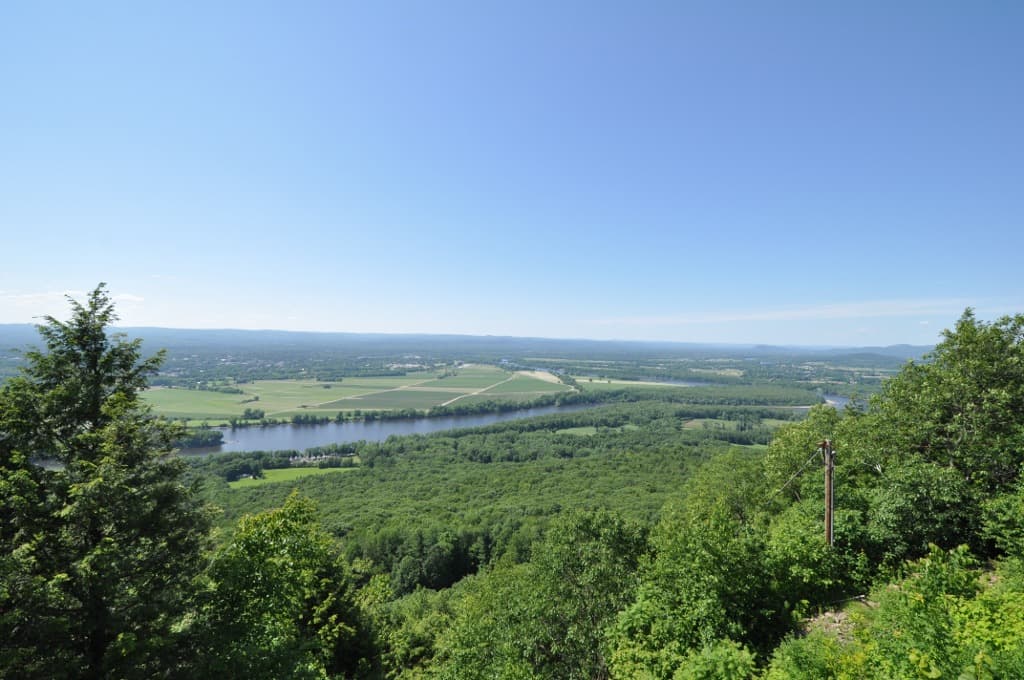
Image credit (same source image above): view northwest from Mount Holyoke, by Magicpiano / Wikimedia Commons, CC BY-SA 4.0. Original image reused; responsive display may resize or crop it. It depicts the surrounding landscape, not a campsite.
